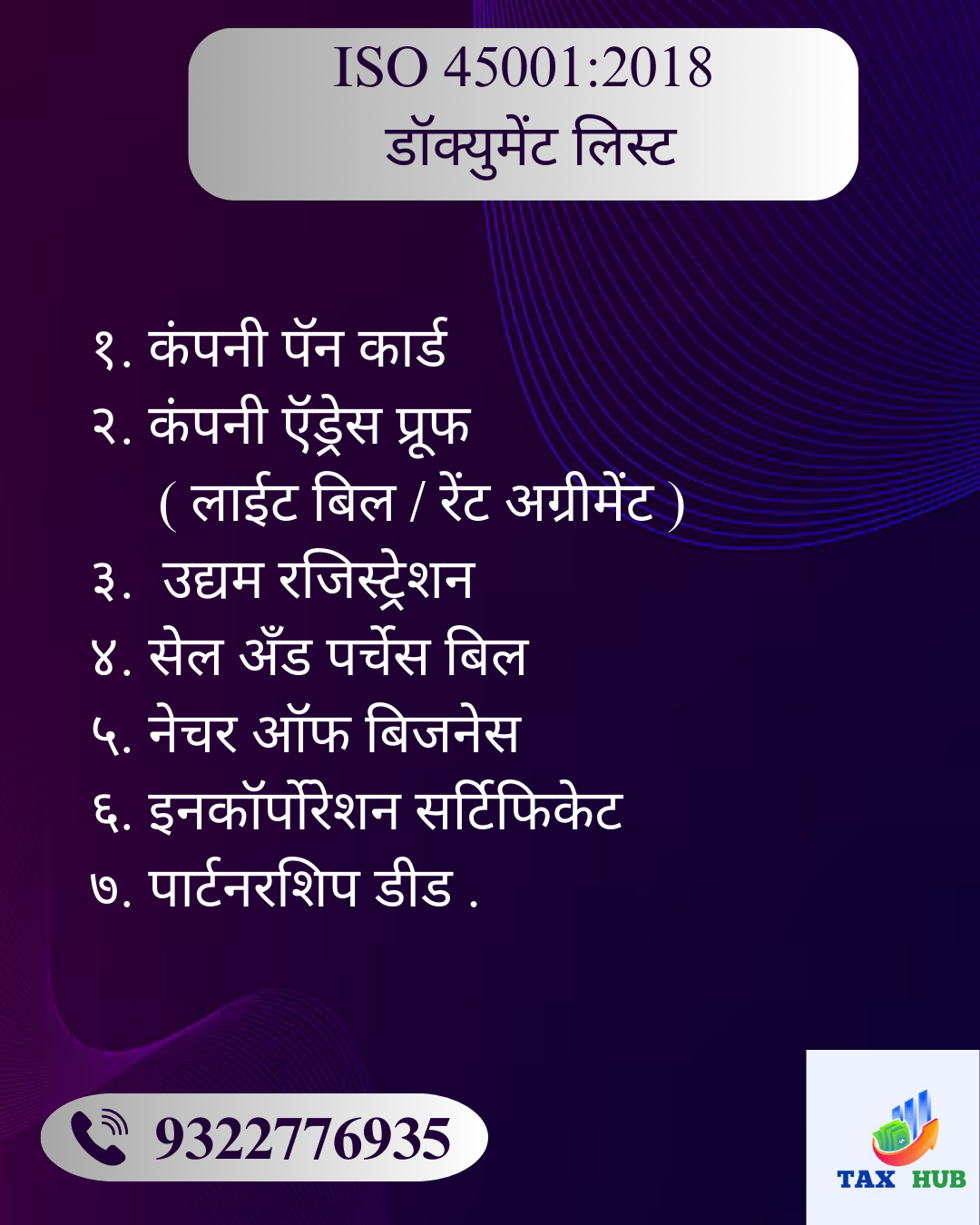
1. Overview of ISO 45001:2018
ISO 45001:2018 is an international standard that specifies requirements for an Occupational Health and Safety (OH&S) management system.It provides a framework to improve employee safety, reduce workplace risks, and create better, safer working conditions.
It can be applied to any organization, regardless of size, type, or nature of work.
Purpose:
- Prevent work-related injury and ill health.
- Provide safe and healthy workplaces.
- Continually improve OH&S performance.
Key Principles:
- Proactive risk management.
- Leadership involvement.
- Worker participation.
- Integration with business processes.
- Continuous improvement.
2. High-Level Structure (HLS)
ISO 45001 uses the Annex SL structure, which aligns it with other ISO standards (like ISO 9001, ISO 14001), making integration easier.The standard has 10 clauses:
| Clause | Title | Description |
|---|---|---|
| 1 | Scope | Defines applicability of the standard. |
| 2 | Normative references | Provides references to ISO 45001 documents. |
| 3 | Terms & definitions | Key OH&S terminology. |
| 4 | Context of the organization | Understanding internal/external issues and needs of interested parties. |
| 5 | Leadership & worker participation | Top management responsibilities, roles, and worker involvement. |
| 6 | Planning | Identifying hazards, risks, opportunities, legal requirements, objectives, and plans. |
| 7 | Support | Resources, competence, awareness, communication, documentation. |
| 8 | Operation | Operational planning and control to manage risks and implement controls. |
| 9 | Performance evaluation | Monitoring, measurement, analysis, evaluation, internal audit, management review. |
| 10 | Improvement | Corrective actions and continual improvement. |
3. Key Clauses in Detail
Clause 4 – Context of the Organization
Organizations must identify internal/external factors affecting OH&S.Determine needs and expectations of interested parties (employees, regulators, contractors, etc.).
Define the scope of the OH&S management system.
Clause 5 – Leadership and Worker Participation
Top management must demonstrate leadership and commitment.Establish OH&S policy aligned with organizational strategy.
Define roles, responsibilities, and accountability.
Ensure worker participation in OH&S decisions, hazard identification, and incident reporting.
Clause 6 – Planning
Hazard Identification & Risk Assessment- Identify OH&S hazards.
- Assess risks and opportunities.
- Determine controls needed to mitigate risks.
Legal and Other Requirements
- Identify applicable laws, regulations, and contractual requirements.
OH&S Objectives
- Establish measurable OH&S objectives and plans to achieve them.
- Consider risks, opportunities, resources, and timelines.
Clause 7 – Support
- Ensure resources for implementing OH&S.- Competence: Workers must be trained for their roles.
- Awareness: Staff understand OH&S policy, risks, and responsibilities.
- Communication: Internal & external communication on OH&S.
- Documentation & Control: Maintain and control documented information.
Clause 8 – Operation
- Operational Planning & Control: Procedures for hazard control.- Elimination of hazards: Reduce risks at the source.
- Management of Change: Plan for changes that may affect OH&S.
- Procurement: Ensure purchased products/services meet OH&S criteria.
- Emergency Preparedness & Response: Procedures for accidents and emergencies.
Clause 9 – Performance Evaluation
- Monitor, measure, analyze, and evaluate OH&S performance.- Conduct internal audits to check conformity.
- Management review: Top management evaluates OH&S system effectiveness.
Clause 10 – Improvement
- Identify nonconformities.- Implement corrective actions.
- Continuously improve OH&S performance.
4. Key Concepts and Tools
Risk-Based Approach- ISO 45001 emphasizes risk-based thinking.
- Focuses on proactive prevention of accidents rather than reacting after incidents.
Worker Participation
- Employees must be involved in decision-making.
- Methods: committees, suggestion schemes, hazard reporting.
Hierarchy of Controls
To manage hazards:
- Elimination
- Substitution
- Engineering controls
- Administrative controls
- Personal protective equipment (PPE)
5. Benefits of Implementing ISO 45001
- Reduces workplace accidents and injuries.- Ensures legal and regulatory compliance.
- Improves worker morale and productivity.
- Enhances organizational reputation.
- Facilitates integration with ISO 9001 and ISO 14001 systems.
- Reduces costs associated with incidents, insurance, and downtime.
6. Certification Process
- Develop OH&S management system based on ISO 45001.- Conduct internal audits and management review.
- Choose accredited certification body.
- Undergo Stage 1 Audit (documentation review).
- Undergo Stage 2 Audit (implementation check on site).
- Correct any nonconformities.
- Receive ISO 45001 certification (valid 3 years, annual surveillance audits).
ISO 45001 is essentially about preventing harm, engaging workers, and embedding OH&S in your business culture, not just paperwork.
You May Also Like

ISO 14001:2015
Rs 7500
ISO 9001:2015
Rs 5000

ISO 45001:2018
Rs 10000