ISO registration requirements
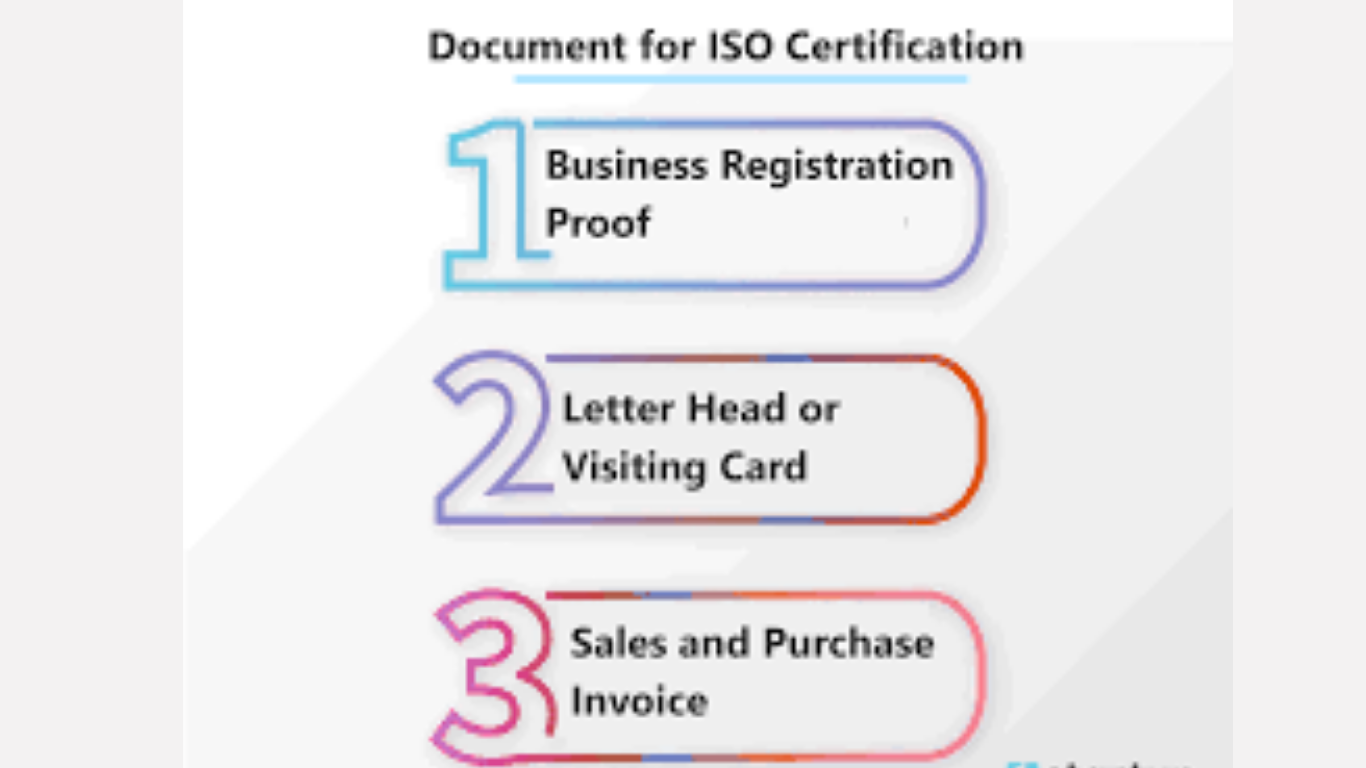
To obtain ISO certification, your organization must meet specific ISO registration requirements, which vary slightly depending on the standard (e.g., ISO 9001, ISO 27001). However, the core requirements are broadly similar across most standards.
✅ General ISO Registration Requirements
🔹 1. Defined Scope of Certification
You must define:
What products/services are being certified
Which locations or departments are included
🔹 2. Management System in Place
You need to implement a management system based on the ISO standard you're pursuing. For example:
ISO 9001 → Quality Management System (QMS)
ISO 27001 → Information Security Management System (ISMS)
ISO 14001 → Environmental Management System (EMS)
This includes:
Documented policies
Procedures and work instructions
Records of operations and decisions
🔹 3. Documented Information
Most ISO standards require the following documented items:
Manuals (e.g., Quality or Information Security Manual)
Policies (e.g., quality, information security, environment)
Process maps or flowcharts
Work instructions or SOPs
Risk assessments
Corrective/preventive action logs
Internal audit reports
🔹 4. Internal Audit Program
You must:
Perform internal audits regularly
Maintain audit records
Take corrective actions for any nonconformities
🔹 5. Management Review Meetings
Top management must:
Review system performance (usually annually)
Assess objectives, nonconformities, customer feedback, etc.
🔹 6. Training and Awareness
Employees must be:
Trained on the relevant ISO standard
Aware of their roles in the management system
🔹 7. Evidence of Implementation
Before certification, you must show:
The system has been in operation for at least 1–3 months
Proper records are maintained (e.g., logs, meeting minutes, reports)
🔹 8. Corrective Actions
You must:
Track issues/nonconformities
Implement root cause analysis and corrective actions
Keep documentation of all actions taken
🔹 9. Compliance with Legal/Regulatory Requirements
You need to demonstrate awareness and compliance with laws applicable to your operations
🧾 Additional Requirements by ISO Standard (Examples)
Standard Additional Requirements
ISO 9001 (QMS) Customer satisfaction monitoring, quality objectives
ISO 27001 (ISMS) Information security risk assessment, Statement of Applicability (SoA)
ISO 14001 (EMS) Environmental aspects and impacts register
ISO 45001 (OHSMS) Hazard identification and risk control procedures
ISO 22000 (FSMS) HACCP plans, food safety procedures
🎓 Registration (Certification) Process Summary:
Once you meet all the above:
Select an accredited certification body
Undergo Stage 1 (documentation audit) and Stage 2 (implementation audit)
Address any nonconformities
Receive your ISO certificate